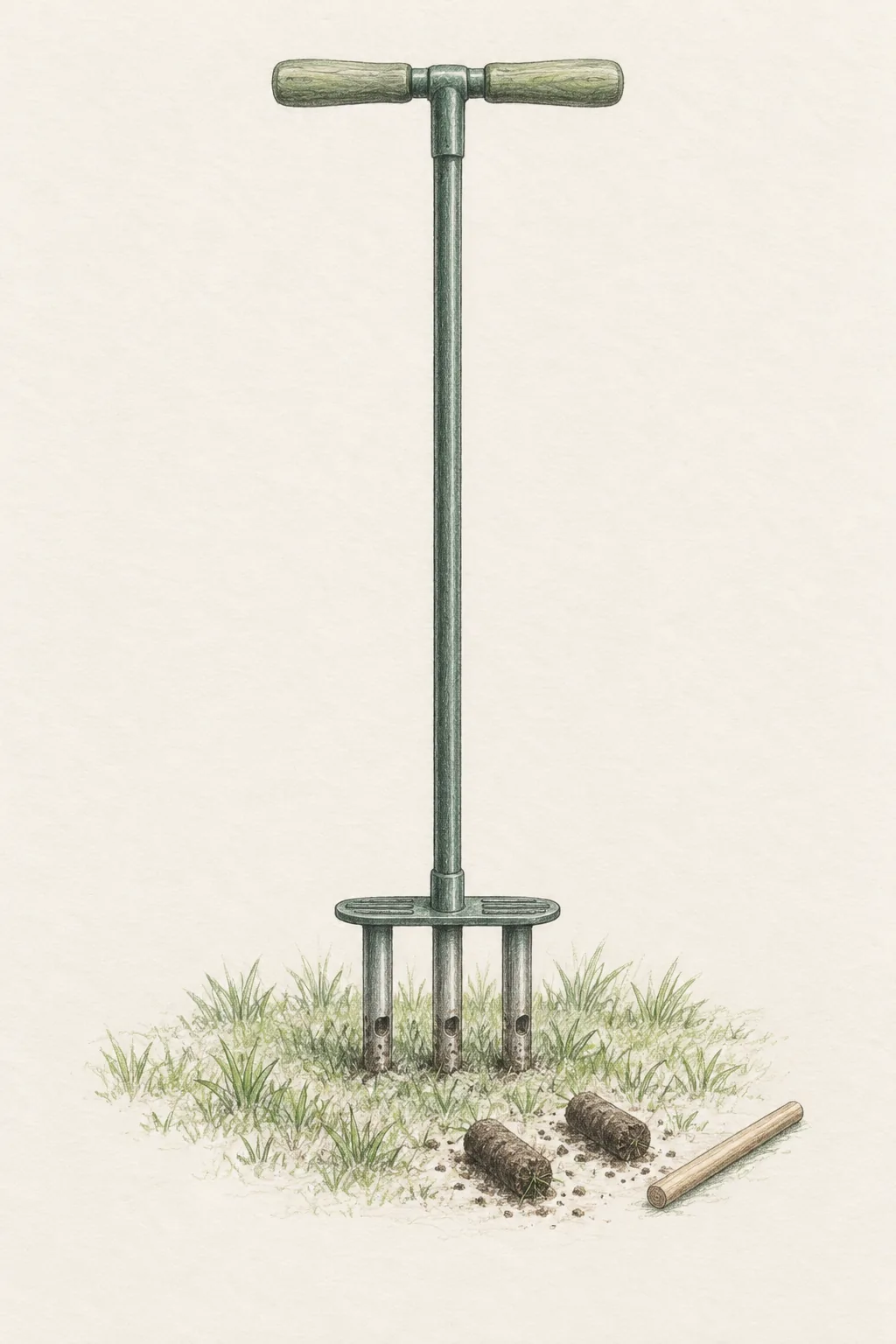
Lawn Core Aerator (2026): 3 Hollow-Tine Tools That Pull Plugs
Garden and lawn care
The best lawn core aerator for most home lawns is the Xuperace Core Aerator, because its side-eject ramp pushes soil plugs out instead of letting them jam in the tines. The Zalawn 3-tine tool is the value pick near $40, and the LawnVigor is the light one for small yards.
Our picks
The best lawn core aerator for a typical home lawn is a manual hollow-tine tool, because the job is removing plugs, not poking holes. A core tool pulls a cylinder of soil out of the ground and leaves a channel behind, which is what breaks up a hard layer under the grass. It also costs less than one rental day.
This guide sits inside the garden and lawn care guides, next to our broader best lawn aerator comparison of core, spike, and rolling tools. If you are watering the lawn after you aerate, the best lawn sprinkler for a large yard covers the coverage side.
What a lawn core aerator does that a spike tool cannot
A core aerator removes soil. A spike aerator pushes it sideways.
That difference decides everything. When a spike tool drives into clay, it squeezes the soil around the hole tighter. Water and air get in for a while, then the hole closes back up after a few waterings. A hollow tine takes a plug out, so the channel stays open and roots have somewhere to grow.
Extension guidance is blunt about it: core aerators remove plugs of soil, and spike devices simply punch holes and compact the soil as they go.
The other half of the job is what the plugs do after they come out. Leave them on the lawn and they crumble back into the soil in about two weeks, returning what they took. That is a slow top dressing you did not have to buy.
Which lawn core aerator should you buy?
Match the tool to the size of the job first, then to your soil.
A three-tine step tool is the sweet spot for most yards. It clears enough ground per press to finish a patch or a small lawn, and it is easier to push than a four- or five-tine head. Two-tine tools sink more easily but take more presses to cover the same ground.
Soil type matters just as much. On clay, you want heat-treated tines, reinforced joints, and a plug-ejection design that keeps you moving. On sandy ground almost anything works, which is why sandy lawns rarely need aeration at all.
Best overall: Xuperace Core Aerator
The Xuperace Core Aerator is the best lawn core aerator for most yards. Its three alloy hollow tines pull real plugs from compacted ground, and the patented side ramp sends each plug out to the side rather than up through the tine, which is where cheaper hollow tools jam.
The frame is formed in one piece, so the tines stay aligned when you press down hard. A wide foot plate lets your body weight do the work, and the height keeps you standing upright instead of bent over a handle. Tines are replaceable and held with screws, so a damaged tine is a swap rather than a new tool.
Who it is for: Compacted lawns, clay soil, and anyone who wants a core tool that keeps moving. Skip it if your lawn is past a few thousand square feet and a rental machine makes more sense.
Shop: Xuperace Core Aerator on Amazon
Best value: Zalawn 3-tine core aerator
The Zalawn Manual Core Aerator is the best core aerator under $40. Its three heat-treated hollow tines reach about four inches deep in moist soil, and the reinforced joints are the part that survives clay without bending.
Rubber grips cut the hand fatigue that comes with a long session, and the tines are replaceable, which is the feature that separates a tool you keep from a tool you replace. It ships mostly assembled, so setup is a few minutes.
Who it is for: Small lawns, bare patches, and clay soil on a budget. Skip it if you want the smoothest plug ejection, where the side-ramp design above has the edge.
Shop: Zalawn Manual Core Aerator on Amazon
Best for small yards: LawnVigor manual core aerator
The LawnVigor Manual Lawn Core Aerator is the best core aerator for small yards and spot work. Three hollow tines, a foot plate, and a long handle mean your weight drives the tool and your back stays straight.
At about 3.5 lb it is light enough to grab for a ten-minute patch, which matters more than it sounds. The tool you actually carry out of the shed is the one that gets used. Tines are replaceable, and the inserts inside them are what release the plug.
Who it is for: Small lawns, bare spots before overseeding, and tight corners a machine cannot reach. Skip it for a full acre, where the per-plug pace stops making sense.
Shop: LawnVigor Manual Core Aerator on Amazon
How deep should a core aerator go?
Aim for about three inches. That is the depth extension guidance describes for a proper core, and it is deep enough to break the compacted layer roots are fighting.
What the numbers actually mean
A proper core is roughly three-quarters of an inch across and three inches long. The tine length on a manual tool is not the same thing as the depth you get, because how far the tines travel depends on how soft the ground is and how hard you press.
What a manual tool can reach
Manual tines on the market run from about 2.3 inches to 5.25 inches of length. In moist soil, a three-tine tool with four-inch tines will pull a full plug. In dry clay, the same tool might only bite an inch before the tines pack solid.
That is the single biggest reason people think manual aerators do not work. They are using the tool on ground that is too dry.
Does it make sense to rent instead of buy?
For a small lawn, buying is the easy call. A one-day rental of a push-behind core aerator runs about $105, and some shops price four hours near $70. A $40 to $70 manual tool pays for itself on the first aeration and keeps working for years.
The rental math
A $69.99 tool used once a year for five seasons costs about $14 a year. That is roughly one-seventh of a single rental day. Even the value pick at $39.99 is cheaper than one rental.
When renting still wins
Size changes the answer. A manual tool covers a small lawn in an afternoon, but a lawn past a few thousand square feet turns into days of pressing. A gas push-behind machine cuts a quarter acre at something close to mowing speed.
The rental also handles the case a manual tool cannot: ground so hard or rocky that a tine will not enter. Powered machines drive through it. Buying one of those is a different budget entirely, since push-behind core aerators sell for anywhere from $1,430 to $6,640.
How many passes does a lawn need?
Two, and the second one should run at right angles to the first.
A single pass from a manual tool leaves gaps between the plug lines. Crossing the pattern is how you get near the 20 to 40 holes per square foot that a properly aerated lawn should have.
The presses per square foot
Here is the arithmetic that tells you whether your tool is up to the yard. At a target of 20 holes per square foot, a three-tine tool needs about seven presses per square foot. A two-tine tool needs about ten. Two passes at right angles cut those numbers in half per pass, which is why the crossing pattern matters.
The time per square foot
The Spruce timed a manual fork on a 25-square-foot patch at 15 minutes. At that pace, 1,000 square feet works out to roughly 10 hours of pressing. That number is the real answer to whether a manual core aerator suits your lawn.
Under about 3,000 square feet, spread over a few weekends, a manual tool is fine. Past that, rent.
When should you core aerate?
Time it with the grass, not the calendar on the wall.
Cool-season lawns recover fastest in early fall, when growth picks back up and the holes help fall seed and fertilizer reach the roots before winter. Warm-season grasses do better in late spring or early summer, while they are actively growing.
Skip it in a summer drought or when the ground is frozen. Stressed grass does not have the energy to close the holes, and frozen ground will not take a tine at all.
Mistakes that jam a hollow-tine tool
Almost every clog traces back to one of three habits.
Water the day before, not the hour before
Moist and crumbly is the target. Soaked soil smears inside the tine, and bone-dry soil crumbles and packs. A deep watering the day before is the single best fix, and gardeners on the lawn forums say the same thing: water heavily first and clogging nearly disappears.
Stop rocking the handle
Once the tines are in the ground, press straight down and pull straight up. Rocking or prying side to side bends tines and widens the holes into ragged craters. Every manufacturer note says the same thing, and it is the fastest way to ruin a tool.
Keep a dowel in your pocket
When a tine does pack solid, a short length of dowel pushes the plug out without you bending down. A 10 mm dowel is the size field testers use. It takes a few seconds and saves the session.
Who should skip a manual core aerator
A manual core tool is the wrong purchase in a few cases. If your lawn is over about an acre, a rental machine does the job in a morning. If the ground is rocky or hard enough that a tine will not start, you need power, not persistence. And if you are fixing one patch before laying sod, borrow one.
For a normal suburban lawn with a few compacted spots, though, a manual core aerator pays for itself the first fall and stores on a hook in the shed.
Bottom line
The Xuperace Core Aerator is the best lawn core aerator for most yards, because the side ramp clears plugs instead of jamming and the one-piece frame takes a real stomp. The Zalawn 3-tine tool is the best value near $40, and the LawnVigor is the light one for small yards and bare patches.
Water the day before, work in a grid, cross the pattern, and leave the plugs where they land. Then read our best lawn aerator guide if you are still weighing core against spike and rolling tools, the best soil test kit for lawn if you are fixing pH before you overseed, and the garden and lawn care guides for the rest of the season.
Frequently Asked Questions
Does core aeration really work?
Yes, and it is the one aeration method that fixes hard compaction. Core tines remove small cylinders of soil, which leaves open channels for air, water, and roots. The accepted target is 20 to 40 holes per square foot, so several passes are usually needed to hit it.
What is the best core aerator for a home lawn?
A manual hollow-tine tool is the best core aerator for a small or medium lawn. Look for three tines, a foot plate, and a design that clears plugs without you stopping. For a lawn past a few thousand square feet, rent a powered core aerator instead.
How deep should a core aerator go?
Aim for about three inches. Extension guidance describes cores roughly three-quarters of an inch across and three inches long. A tool that claims four inches can reach that in moist soil, but only if you water the day before.
Is it cheaper to rent a core aerator or buy one?
Buying wins for a lawn under about 3,000 square feet. A one-day core rental runs about $105, so a $40 to $70 manual tool pays for itself on the first aeration. Past that size, the rental covers more ground in one morning than a manual tool will in a week.
How many passes do I need?
Plan on two, with the second at right angles to the first. A single pass from a manual tool leaves gaps. Crossing the pattern is what gets you close to the 20-hole-per-square-foot floor, and it catches the spots you skipped.
Why do my hollow tines keep clogging?
Soil moisture is almost always the reason. Tines pack with crumbly dry soil or smear in soaked ground. Water the lawn the day before so the soil is moist and crumbly, and keep a short dowel handy to push out a stubborn plug.
What do I do with the soil plugs?
Leave them. The cores break down in about two weeks and feed the soil back. If the look bothers you, drag the back of a rake across them or run the mower over them to break them up faster.
Can I overseed right after core aeration?
Yes, and it is the best order. Aerate first, then spread seed so it falls into the open holes and gets soil contact. Water lightly and often for the first two weeks while the seed establishes.