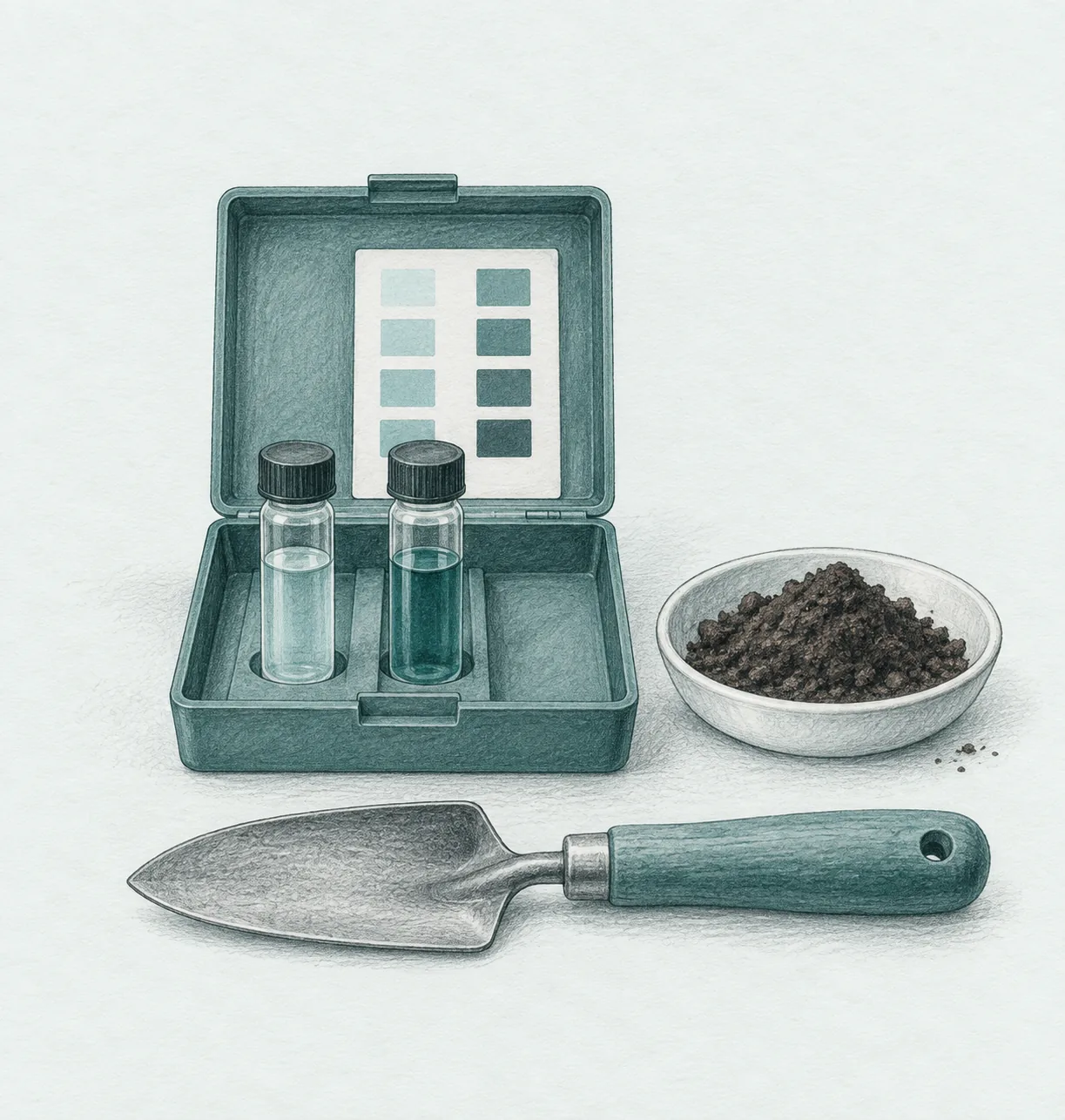
Best Soil Test Kit for Lawn (2026): 3 Picks for Real Results
Garden and lawn care
The best soil test kit for a lawn is MySoil, a mail-in lab test that reports 13 nutrients and pH with feeding advice. The Rapitest kit is the budget pH screen, and the 140-test kit covers a full season of checks.
Our picks
The best soil test kit for a lawn is MySoil for the usual case: you want to know exactly what your soil is short on before you spend money on fertilizer or lime. It is a mail-in test, the lab checks 13 plant-available nutrients plus pH, and the report comes back with recommendations tailored to your soil.
The Rapitest kit is the cheap way to get a rough pH and nitrogen read in minutes. The 140-test liquid kit is the value choice if you like to test several spots or retest through the season.
This guide sits inside the garden and lawn care guides, alongside the best lime for lawn for correcting acidic soil and the best organic lawn fertilizer for feeding once you know what is missing.
Lab test or home kit: what each tells you
Both tools answer questions, but they answer different ones.
A lab test gives numbers. You mail a sample and get back specific nutrient levels plus pH, along with guidance on what to add. That precision matters when you are about to buy lime or a specialized fertilizer.
A home kit gives a screen. Color kits read pH and the big three nutrients in broad categories like depleted or adequate. They are fast and cheap, and they are useful for spotting an obvious problem. They are not precise enough to dose amendments.
How to use both. Start with a home kit or an existing lab report, then spend on a lab test when the stakes are high. Use a home kit to monitor through the season between lab tests.
Top pick: MySoil Soil Test Kit
The MySoil Soil Test Kit is the best soil test kit for a lawn. The lab analyzes 13 plant-available nutrients plus pH, which is far more detail than a home color kit provides.
Unlike a home meter or strip, the mail-in lab measures what is actually available to the plant, and the results come with recommendations tailored to your soil and what you are growing. The kit carries a prepaid mailer, and the sample takes only a few minutes to collect.
Results typically arrive in about six to eight days. In the busy fall season, expect the longer end of that range. The 2-pack gives you a second test for another area or a retest later.
Who it is for: Anyone who wants real numbers before buying fertilizer or lime, especially on a lawn that has not responded to the usual products. Skip it if you only want a quick pH read and do not care about nutrient detail.
Shop: MySoil Soil Test Kit on Amazon
Best budget: Rapitest Soil Test Kit
The Rapitest Soil Test Kit is the best budget soil test kit. It includes 20 tests, five each for pH, nitrogen, phosphorus, and potassium, using a capsule system and color comparators.
The pH and nitrogen tests are the useful ones for most homeowners. They tell you whether the soil is in a healthy range and whether the lawn is likely short on nitrogen before you buy a bag.
Testing takes a few minutes and no mailing. Treat the results as a rough screen, and confirm anything surprising with a lab test before making big changes.
Who it is for: Budget-minded homeowners who want a quick pH and nitrogen read. Skip it if you need precise phosphorus and potassium numbers for a feeding plan.
Shop: Rapitest Soil Test Kit on Amazon
Best for routine checks: Soil Test Kit 140 Tests
The Soil Test Kit 140 Tests is the best soil test kit for routine monitoring. The liquid kit covers pH, nitrogen, phosphorus, potassium, and ammonia across 140 tests, which is enough to sample multiple zones and retest through the season.
The low cost per test makes it easy to check a problem area, change your approach, and check again. It is fast and needs no mailing.
As with any color kit, results are read by eye. Use good light and a plain background, and follow the mixing and wait times so the color reads true.
Who it is for: Gardeners and lawn owners who test often and want to watch trends. Skip it if you want lab-grade numbers for a single important decision.
Shop: Soil Test Kit 140 Tests on Amazon
How to take a soil sample that gives useful numbers
The test is only as good as the sample.
- Sample several spots. A single scoop from one corner does not represent the lawn. Mix soil from five to ten spots.
- Keep the depth consistent. About three to six inches down is the standard for lawn soil.
- Clean your tools. A dirty trowel or bucket can throw off the reading.
- Avoid odd spots. Skip the area next to the driveway, the compost pile, and any spot treated differently.
- Label your zones. If parts of the lawn behave differently, test them separately.
Good sampling is why a lab test beats a single quick stick reading even when the kit is more expensive.
Who should skip a home kit
- You plan to spend on lime or specialty fertilizer. Use a lab test so you dose correctly.
- You want numbers for a report or a plan. A color kit category is not a number.
- Your lawn is fine. There is no need to test soil you are already happy with.
- You only care about pH. A simple pH test or meter may be enough on its own.
For a lawn that keeps underperforming, a soil test is often the cheapest diagnostic step you can take. It turns guesswork into a short list of things to fix.
Bottom line
The MySoil Soil Test Kit is the best soil test kit for a lawn, with lab analysis of 13 nutrients plus pH and recommendations tied to your soil. The Rapitest kit is the budget screen, and the 140-test liquid kit is best for routine checks.
Start there, then correct pH with the best lime for lawn and feed with the best organic lawn fertilizer. More guides are in the garden and lawn care section.
Frequently Asked Questions
What is the best soil test kit for a lawn?
MySoil is the best soil test kit for a lawn if you want reliable numbers. It is a mail-in lab test that reports 13 nutrients plus pH and returns specific feeding advice. For a quick, cheap pH screen, the Rapitest kit works, and the 140-test liquid kit is best for repeat checks.
Do home soil test kits actually work?
Home color kits give a rough read, not lab numbers. Comparisons against lab results show nitrogen categories often track in the right direction, while phosphorus and potassium can disagree sharply. Treat a home kit as a screen and use a lab test before making big amendments.
How long do mail-in soil tests take?
Most lab kits return results in about six to eight days after the sample is received. Users report faster turnarounds of two to three days in quiet periods, and longer waits of ten days or more during the busy fall season.
How do I take a good soil sample for a lawn?
Pull soil from several spots around the lawn, mix them together, and test the mix. Sample at a consistent depth, about three to six inches down, and avoid spots right next to the driveway or a treated area. A clean trowel helps.
Is a lab soil test worth it over a cheap kit?
Yes, if you plan to spend real money on fertilizer or lime. The lab report tells you exactly which nutrients are short, so you buy only what you need. A cheap kit can point you in a direction but is not precise enough to dose amendments.
Can I test soil pH without sending it to a lab?
You can. Many home kits include a pH test, and there are also probe meters. A home pH reading is a useful first look, but if the number is far off normal, confirm it with a lab or a second method before spreading lime or sulfur.
Should I test my lawn soil every year?
Testing every year or two is a reasonable habit, and it is worth testing after any big change like liming, aerating, or a new seeding. For routine checks between lab tests, a liquid kit with many tests is the cheaper option.