Best Lawn Aerator (2026): Core, Spike, and Rolling Picks
Garden and lawn care
The best lawn aerator for most lawns is the LawnVigor manual core aerator, which pulls plugs instead of poking holes. The Walensee 15-spike tool covers small yards for less, and the SENVERT roller handles a bigger lawn.
Our picks
The best lawn aerator for most home lawns is a manual core tool, because the job is removing plugs, not poking holes. The LawnVigor core aerator does that for the price of one rental, and it stores on a hook in the shed. If your lawn is small, the Walensee spike tool costs less. If it is large, the SENVERT roller covers ground in passes.
This guide sits inside the garden and lawn care guides and pairs with the best tiller for garden for the bed work and the best garden hose reel for watering after aeration.
Core, spike, or rolling: pick the job first
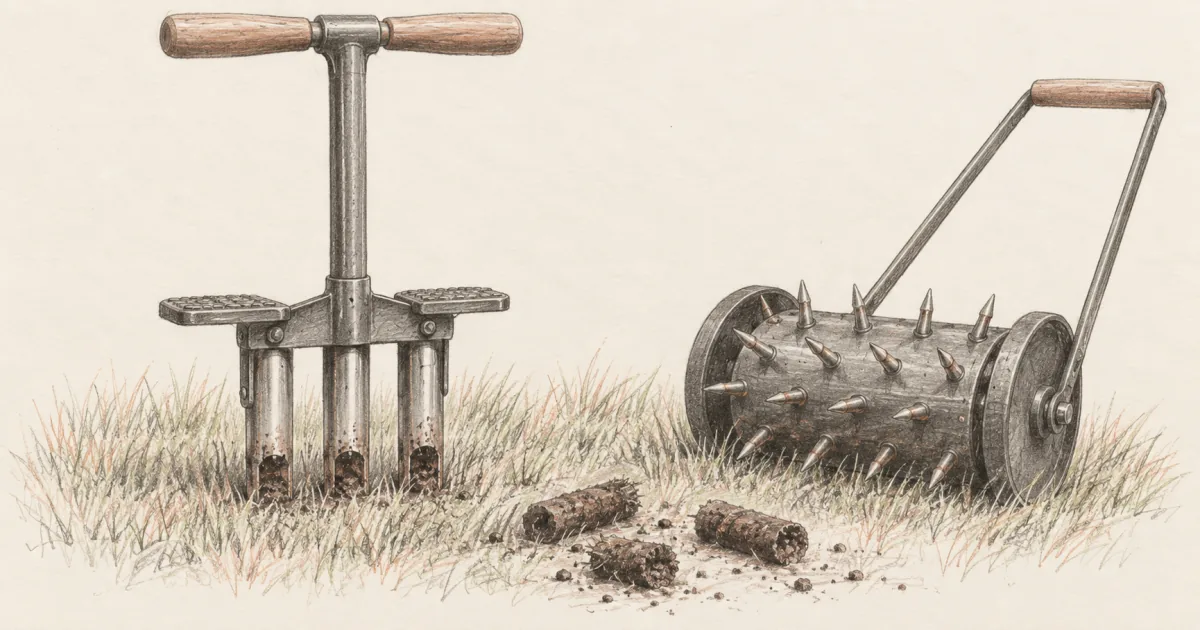
Three tools get sold as aerators, and they do three different things.
A spike tool is not a lesser aerator, it is a different one. The spikes open the surface without taking anything out, so the lawn gets air and water but the compaction underneath stays. A core tool actually removes soil, which is what breaks up a hard layer and gives seed somewhere to land.
Pick by soil and size. Heavy clay, years of foot traffic, or a lawn that puddles after rain points at core aeration. A sandy lawn that drains well, or a patch you want to freshen in fifteen minutes, is fine with spikes.
Top pick: LawnVigor manual core aerator
The LawnVigor Manual Lawn Core Aerator is the best lawn aerator for most home lawns. Its three hollow tines pull plugs up to about four inches deep, which opens a channel straight down to the root zone instead of pressing the soil sideways.
The foot plate lets your body weight drive the tines, and the long handle keeps you standing upright while you work. It weighs about 3.5 lb, so you can carry it one-handed to the far corner. Replacement tines are sold separately, so a bent tine does not retire the tool.
Who it is for: Small to medium lawns, compacted patches, and anyone who wants to aerate before overseeding. Skip it if your lawn runs past a few thousand square feet, where the per-plug pace stops making sense.
Shop: LawnVigor core aerator on Amazon
Best budget: Walensee 15-spike aerator
The Walensee Manual Lawn Aerator is the best lawn aerator when the yard is small and the budget is tight. Fifteen iron spikes about 2.8 inches long sit in three rows, so each press opens a spread of holes rather than a single line.
The 34.6-inch shaft and cushioned T-handle cut the bending, and the foot bar lets you lean your weight into the ground. It ships with spare spikes, and the powder-coated iron stands up to being left outside between sessions.
Who it is for: Small lawns, lawn edges, bare patches, and anyone who wants to prepare a spot for seed in an afternoon. Skip it if the ground is heavy clay or rocky, and skip it if you have a whole large lawn to cover.
Shop: Walensee 15-spike aerator on Amazon
Best for bigger lawns: SENVERT rolling aerator
The SENVERT Rolling Lawn Aerator is the best lawn aerator for a medium to large lawn without a tractor. The drum holds sand or stones to bring the unit up to 55 lb, and the spiral-spiked tread rolls smoothly enough to push in long passes.
The auxiliary TPR wheels are the practical detail. They let you roll the unit across concrete and pavers to reach the lawn edge without bouncing 40 steel spikes over the surface. The main body arrives assembled, so setup is the handle and a bag of sand.
Who it is for: Lawns from about 3,000 square feet up to an acre, and anyone who wants to aerate in an afternoon without renting. Skip it if your soil is dry clay and you will not water first, because it will feel like rolling a barrel over a parking lot.
Shop: SENVERT rolling aerator on Amazon
When to aerate and how often
Timing does most of the work. Aerate when the grass is actively growing and the soil is moist, which for cool-season lawns means early fall and for warm-season lawns means late spring.
- Fall is the default for cool-season grass. The lawn recovers fast, and the holes help fall seed and fertilizer reach the roots before winter.
- Water the day before, not the hour before. Damp soil lets tines and spikes go deep. Soaked soil turns to mud, and bone-dry soil fights back.
- Once a year is enough for most lawns. Heavy clay or heavy foot traffic may want twice.
- Sandy soil can wait longer. If water drains quickly and the turf feels firm, you have less reason to aerate.
- Skip it in a drought or a freeze. Aerating stressed or frozen grass does more harm than good.
Leave the plugs on the lawn. They break down in a week or two and put the soil and its nutrients back into the turf.
Aerating a clay lawn without wrecking your back
Clay is where the difference between tools shows up.
- Water two days ahead, then let it drain. You want moist and crumbly, not shiny and wet.
- Work in patches, not the whole lawn at once. Twenty minutes of plugs, then a break, beats an hour of stubborn pushing.
- Take the plugs out, do not just poke. A core tool releases the tension in the soil. Spike holes in hard clay can close back up after a few waterings.
- Go over a second time at right angles. The second pass catches the spots you skipped.
- Aerate before you overseed, not after. Seed that lands in a hole has a chance. Seed sitting on a thatch mat does not.
If the ground is so hard that a tine will not enter, that is a sign to water deeper and wait a day, or to rent a powered core aerator and let the machine do it.
Who should rent or hire instead
Buying an aerator is the wrong call in a few cases:
- A lawn over about an acre. A rolling unit covers ground, but a powered or tow-behind core aerator is faster and you only need it once a year.
- Extremely hard or rocky ground. A rental machine with the right tines handles it, and a manual tool will not.
- One aeration, one time. If you are fixing a single problem patch before laying sod, borrow or rent.
- Mobility limits that make pushing and pressing painful. A lawn service that core aerates costs less than a season of discomfort.
For a normal suburban lawn, though, a manual core tool pays for itself the first fall and keeps working for years.
Bottom line
The LawnVigor manual core aerator is the best lawn aerator for most lawns, because it pulls four-inch plugs with body weight and stores on a hook. The Walensee 15-spike aerator is the budget pick for a small yard, and the SENVERT rolling aerator is the one to buy when the lawn is too big to walk one plug at a time.
After aerating, water it in with the best garden hose reel, and see the best tiller for garden if you are prepping beds at the same time. The rest of the season lives in the garden and lawn care guides.
Frequently Asked Questions
What kind of lawn aerator works best?
A core, or plug, aerator works best for most lawns because it removes small cylinders of soil and leaves open channels for air and water. A spike aerator pushes soil sideways, which helps lightly compacted turf but does not relieve hard compaction. For a small yard a manual core tool is enough. For a large lawn, rent a powered core aerator or use a rolling unit.
Which is better, a spike or plug lawn aerator?
Plug aeration is the better long-term fix because it takes soil out of the lawn. Spike aeration is faster and cheaper, and it is fine for a lawn you aerate a few times a year or a patch that is only lightly compacted. If your soil is hard clay or the lawn has been walked on for years, choose plugs.
What month is best to aerate a lawn?
Aerate cool-season grass in early fall, when the lawn is growing again and the soil is moist but not soaked. Warm-season lawns do better in late spring or early summer. Avoid aerating in the middle of a summer drought or when the ground is frozen, and give the lawn a good watering the day before.
What is the best tool for aerating my lawn?
For a small lawn or a few problem patches, a manual core aerator with hollow tines is the best tool. It costs less than a rental, stores on a hook, and gets four-inch plugs. For a lawn over a few thousand square feet, a rolling aerator covers ground faster, and beyond that a tow-behind or powered core aerator earns its keep.
Can I aerate and overseed at the same time?
Yes, and the order matters. Aerate first, leave the soil plugs on the lawn, then spread seed so it settles into the open holes and the crumbled plugs. The holes give seed to soil contact, which is what germination actually needs. Water lightly and often for the first two weeks.
How often should I aerate my lawn?
Once a year is plenty for most home lawns, and heavy clay or heavy foot traffic may want it twice. Lawns on sandy soil that drains well can go two or three years between aerations. Signs you waited too long are water puddling on the surface and a lawn that feels spongy underfoot.
Is a manual aerator worth it?
A manual aerator is worth it for a small lawn, a lawn with a few compacted patches, or a yard you cannot get a machine into. It is real work per square foot, so it stops being a good deal past a few thousand square feet. Below that, it does the same job as a rental for the price of one visit.