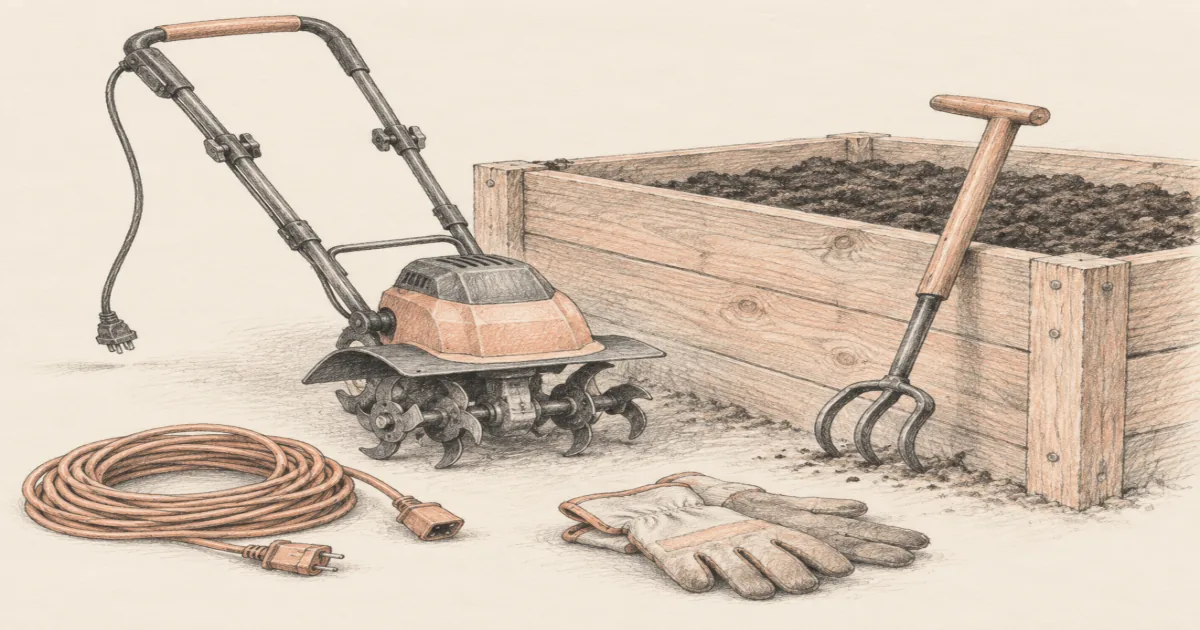
Best Tiller for Garden (2026): Electric and Hand Picks
Garden and lawn care
The best tiller for a garden is a 16-inch electric model for most plots. The Sun Joe TJ604E leads, the LawnMaster TE1216M is the value pick, and the Jardineer hand tiller handles raised beds without a cord.
Our picks
The best tiller for most home gardens is the Sun Joe TJ604E when you want an electric machine that preps a bed in a few passes without gas or a battery. It cuts clay and mixes compost, and it is light enough to carry to a raised bed. The LawnMaster TE1216M is the budget route, and the Jardineer hand tiller is the smart pick when the bed is small enough that a cord or a motor is overkill.
This guide sits inside the garden and lawn care guides and pairs with the best garden hose reel guide for the watering side of the setup.
What kind of tiller you need
Start with the size of the plot, then match the power.
A corded electric tiller is the sweet spot for most home gardeners. It has enough torque for a proper bed, it never runs out of charge, and it costs less than a gas machine with no oil changes or fuel to mix.
The catch is the cord. Plan your path so the cord stays behind you and out of the tines, and use a heavy-duty outdoor extension cord rated for the amperage.
Top pick: Sun Joe TJ604E
The Sun Joe TJ604E is the best tiller for most gardens. Its 13.5-amp motor spins six steel tines at 370 RPM and cultivates a 16-inch wide by 8-inch deep swath, which makes short work of a vegetable plot or a set of flower beds.
The three-position rear wheels set how deep the tines dig, and the folding handle makes the unit easy to store and carry. At about 27 pounds it is light enough to lift into a raised bed or the back of a truck. The motor needs no gas, oil, or tune-ups.
Who it is for: Gardeners prepping beds up to a few hundred square feet in one go. Skip it if you garden a large plot or break new sod, where a bigger machine earns its keep.
Shop: Sun Joe TJ604E on Amazon
Best value: LawnMaster TE1216M
The LawnMaster TE1216M is the best tiller value for a small garden. The 12-amp motor and six rust-resistant steel blades take a 16-inch cut up to 9 inches deep, and a two-stage gearbox with a mechanical clutch keeps the tines turning under load.
The transit wheel adjusts to three positions so the machine rolls between beds and then digs in when you drop it. It folds for storage and runs on a standard outdoor cord. For a first tiller on a budget, it covers the same beds as the top pick.
Who it is for: Beginners and small plots where the price matters more than the last inch of power. Skip it if you plan to break a lot of new ground, where the bigger motor in the Sun Joe is worth the step up.
Shop: LawnMaster TE1216M on Amazon
Best hand tiller: Jardineer
The Jardineer Hand Tiller is the best hand tiller for raised beds and tight rows. The anti-slip foot plate lets you put your weight into the tines instead of relying on arm strength, which is what makes heavier soil workable.
The 37-inch curved handle cuts the bending and twisting, and the powder-coated steel tines resist rust across seasons. It needs no cord, no gas, and no battery, so it is always ready and stores in a corner of the shed.
Who it is for: Raised-bed gardeners, flower borders, and anyone who wants to loosen small patches without dragging out a machine. Skip it if you need to break a full-size plot, where a powered tiller saves hours.
Shop: Jardineer Hand Tiller on Amazon
Tiller or rototiller: what the words mean
The labels get used loosely, so here is the plain version.
- Cultivator: the small machine for working the top few inches of soil you already garden. Good for weeding and mixing compost.
- Tiller: a mid-size machine that turns deeper, often 8 inches or more. The corded models here are in this class.
- Rototiller: the heavy version for new ground and compacted clay, usually gas-powered with front or rear tines.
For a home vegetable garden that already exists, a corded tiller is the right size. Rent a big rototiller once if you are breaking new ground, then keep the small machine for the seasons after.
Tilling hard or clay soil
Hard ground is where most cheap tillers fail, so work it in stages:
- Water the bed two or three days ahead if it is bone dry, then let it drain so it is moist but not wet.
- Take shallow passes first, letting the tines chip the surface instead of forcing the machine down.
- Go perpendicular to your first pass, then go deeper once the top layer is loose.
- Pick out rocks bigger than your fist before the tines find them.
A 13.5-amp electric tiller with steel tines handles clay a lot better than the motor size suggests, as long as you let the machine set the pace.
Who should skip a tiller
A tiller is not the right tool for everyone:
- No-till beds. If your beds are healthy and mulched, a hand cultivator or a broadfork does less damage to soil structure.
- Tiny plots. A few square feet of herbs and flowers need a hand tool, not a motor.
- Steep or terraced ground. A wheeled machine is awkward on a slope, and a hand tiller is safer.
- Borrowing once a year. If you turn a bed once each spring, a neighbor or a rental is cheaper than owning.
For the rest, a corded tiller is the practical middle ground between a hand tool and a gas machine.
Bottom line
The Sun Joe TJ604E is the best tiller for a garden for most plots, with a 13.5-amp motor, a 16-inch wide by 8-inch deep cut, and a light frame you can lift into a raised bed. The LawnMaster TE1216M does the same job for less, and the Jardineer hand tiller is the pick for raised beds without a cord.
For the rest of the growing setup, browse the garden and lawn care guides and the best garden hose reel guide for watering after the beds are prepped.
Frequently Asked Questions
What is the best garden tiller for the money?
For most gardens the Sun Joe TJ604E is the best tiller for the money. It runs on a 13.5-amp motor, turns a 16-inch wide by 8-inch deep bed, and costs less than a gas machine with none of the fuel or maintenance. The LawnMaster TE1216M is the value pick if you want to spend a little less, and the Jardineer hand tiller costs the least for raised beds.
What kind of tiller do I need for a garden?
Match the tiller to the plot. A small raised bed or a few flower borders need a hand cultivator or a light electric cultivator. A standard vegetable plot up to about 1,500 square feet is a good fit for a 12- to 14-amp corded tiller. For new ground, heavy clay, or a large plot, a bigger front- or rear-tine machine does the job.
What is the difference between a tiller and a rototiller?
People use the words for the same job. A tiller, or cultivator, is the smaller machine for working the top few inches of soil you already garden. A rototiller is the heavier version for breaking new ground and turning deeper. Both use rotating tines, and the size of the machine is what separates them.
What type of tiller is best for hard soil?
Hard or clay soil wants weight and torque. A 13.5-amp electric tiller like the Sun Joe TJ604E cuts through packed clay in stages, and the six steel tines chip away at the bed instead of stalling. Take shallow passes and let the tines pull the machine, then go deeper once the top layer is loose.
Is a corded electric tiller powerful enough?
For a home garden, yes. A 12- to 13.5-amp corded tiller breaks up a bed up to 8 inches deep and has no battery to run down. The tradeoff is the cord, so buy a 14-gauge outdoor extension cord long enough to reach the far bed without a leader.
Do I need a tiller or just a cultivator?
Start with a cultivator if your beds already grow and just need loosening, weeding, and compost mixed in. Move up to a tiller if you are breaking new ground or the soil is compacted clay. Many gardeners end up with a cultivator for the beds and a bigger machine they rent or borrow once for new ground.
When is the best time to till a garden?
Till when the soil is moist but not wet. Grab a handful and squeeze it: if it crumbles, it is ready, and if it holds a ball, it is too wet and the tines will smear the soil. Spring bed prep and fall cleanup are the two windows most gardeners use.