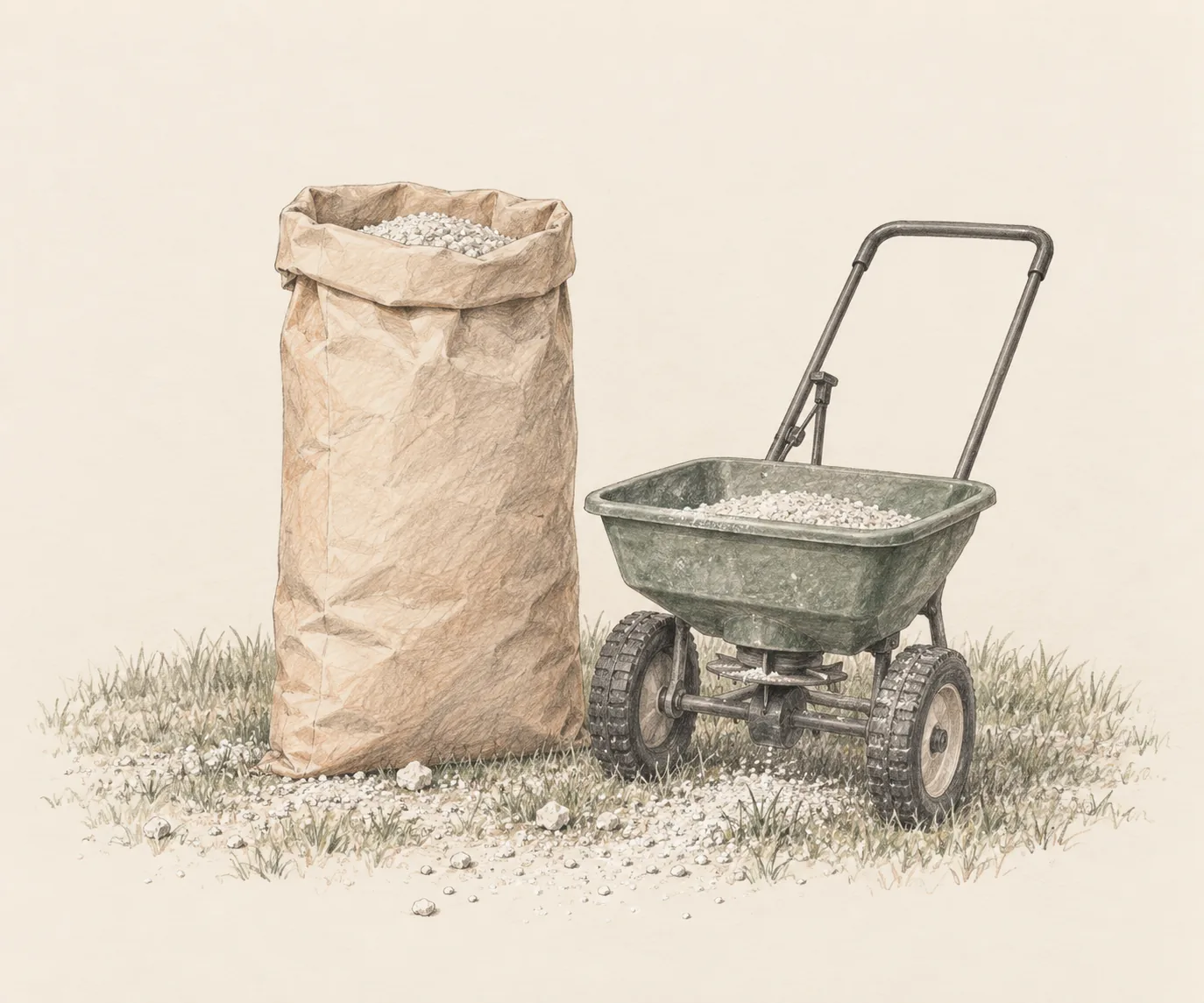
Best Lime for Lawn (2026): 2 Picks That Raise pH
Garden and lawn care
The best lime for a lawn is Earth Science Fast Acting Lime, which raises soil pH with clean granules instead of dust. A 5 lb bag suits small lawns, and a 25 lb bag covers a full yard.
Our picks
The best lime for a lawn is Earth Science Fast Acting Lime for the usual case: soil that tests acidic and grass that cannot take up nutrients until pH comes up. The granules spread cleanly, they add calcium, and there is none of the dust cloud you get with pulverized lime.
The ENCAP 25 lb bag is the pick when your lawn is large enough that a small bag only touches part of it. Both are granular, so a basic broadcast spreader handles them.
This guide sits inside the garden and lawn care guides, next to the best soil test kit for lawn that tells you whether you need lime at all, and the best organic lawn fertilizer for feeding once pH is in range.
What lime does and when a lawn needs it
Lime is a soil amendment, not a fertilizer. It raises pH, and pH controls how well grass can use the food that is already in the soil.
pH unlocks nutrients. When soil is too acidic, nutrients bind up and never reach the roots. Raising pH with lime frees them, which is why a lawn can look better after lime without any fertilizer added.
Most lawns want 6.0 to 7.0. Below that range, grass thins and weeds move in. If a test shows you are already at a good pH, adding lime pushes it too high and creates a new problem.
Test before you spread. A pH result tells you whether lime is needed and roughly how much. Without a test you are guessing, and guessing wrong wastes a season.
Top pick: Earth Science Fast Acting Lime
The Earth Science Fast Acting Lime is the best lime for a small to average lawn. The granules are easy to spread with any spreader, and they start raising soil pH as soon as they contact the soil.
The product adds calcium and uses a soil-bonding technology that helps hold the lime where you put it, which reduces nutrient runoff. It is safe for any grass type, and people and pets can use the lawn right after application.
Apply at about 5 pounds per 1,000 square feet, then water for 15 minutes to activate it faster. The 5 lb bag is sized for a small lawn or a spot treatment.
Who it is for: Lawns that tested acidic and need a clean, low-dust granular lime. Skip it if your pH is already in range, since raising it further causes problems.
Shop: Earth Science Fast Acting Lime on Amazon
Best for big lawns: ENCAP 25LB Fast Acting Lime
The ENCAP 25LB Fast Acting Lime is the best lime for a full lawn. The 25 lb bag covers about 5,000 square feet, and the granules bond with the soil to help reduce nutrient runoff and waste.
The lime naturally raises pH and adds the calcium that grass needs to take up food. It works across the season, so you are not locked into one narrow window.
Spread it on a dry lawn at the bag rate and let the soil do the rest. Retest in four to six months before deciding whether a second application makes sense.
Who it is for: Homeowners with a larger lawn who want one bag to cover the job. Skip it if you only have a small patch, where the 5 lb bag is plenty.
Shop: ENCAP 25LB Fast Acting Lime on Amazon
Lime versus pelletized lime versus gypsum
These products get confused, and they do different jobs.
Use lime when the test says the soil is acidic. Use gypsum when you need calcium but pH is already fine. Choosing the wrong one wastes the application.
How to test pH before you spread lime
Lime is one of the few lawn products where guessing does real harm, in either direction.
- Take a composite sample. Pull soil from several spots at a consistent depth, mix it, and test the mix.
- Use a kit or a lab. A mail-in lab kit gives the most reliable number, while a home kit gives a rough read.
- Read the number against your grass type. Most lawn grasses do best between 6.0 and 7.0.
- Apply, then wait. Retest four to six months later before adding more lime.
If your test shows the soil is already close to neutral, spend the money on fertilizer instead. Lime only helps when pH is the limiting factor.
Who should skip lime
- Your pH is already 6.0 to 7.0. More lime pushes it too high and locks up nutrients.
- You have not tested. You may be treating a problem you do not have.
- Your grass is dormant or stressed. Lime works best on an actively growing lawn.
- You want a quick green-up. Lime is slow, and a fertilizer is the right tool for color.
For lawns with acidic soil, lime is one of the highest-value steps you can take. For everyone else, it is an easy way to create a new problem.
Bottom line
The Earth Science Fast Acting Lime is the best lime for most lawns, with clean granules that spread easily and start raising pH on contact. The ENCAP 25 lb Fast Acting Lime covers a full 5,000 square feet for larger yards.
Test first with the best soil test kit for lawn, then feed once pH is in range with the best organic lawn fertilizer. More guides are in the garden and lawn care section.
Frequently Asked Questions
What is the best lime for a lawn?
Earth Science Fast Acting Lime is the best lime for most lawns. Its granular form spreads evenly, keeps dust down, and starts raising soil pH on contact. For a larger lawn, the 25 lb ENCAP Fast Acting Lime covers about 5,000 square feet in one bag.
When should I apply lime to my lawn?
Lime can go down any time the grass is actively growing, though early fall is popular because the soil stays workable and the lime has time to react before spring. Apply only to a dry lawn, and never to grass that is dormant, wilted, or stressed.
How do I know if my lawn needs lime?
Test your soil pH first. Most lawn grasses do best between about 6.0 and 7.0. If a test shows the soil is more acidic than that, lime raises the pH. Testing first keeps you from spreading lime you do not need, which can push pH too high.
How much lime does a lawn need?
It depends on your starting pH and soil type. Earth Science recommends about 5 pounds per 1,000 square feet for its fast acting lime, so a 25 lb bag covers roughly 5,000 square feet. Retest four to six months later before adding more.
Is fast acting lime better than pelletized lime?
Fast acting lime is a granular product that starts working after it contacts the soil, and it is far less dusty than pulverized lime. Pelletized lime is also easy to spread. Both raise pH, though neither changes soil chemistry overnight.
Will lime burn my grass?
Lime is not a fertilizer and does not burn the way a high-nitrogen product can. That said, apply it to a dry, actively growing lawn and follow the bag rate. Over-applying can push pH too high, which locks up nutrients instead of freeing them.
Can I spread lime and fertilizer at the same time?
It is better to separate them. Let the lime react with the soil for a few weeks first, then feed. Spreading both at once makes it hard to tell what worked, and a soil test between the two steps gives you a clearer picture.