Best Lawn Roller (2026): 3 Picks for Leveling and Seeding
Garden and lawn care
The best lawn roller is the VEVOR 13-gallon push roller, whose sealed plug holds water without weeping. The Brinly 270 lb poly roller pushes or tows, and the VEVOR 400 lb tow-behind covers wide passes behind a tractor or ATV.
Our picks
The best lawn roller is the VEVOR 13-gallon push roller for the usual job: pressing seed into soil after overseeding, firming up new sod, and knocking down small bumps without compacting the whole lawn. The sealed fill plug is the detail that matters most, because cheap rollers weep water from the plug and the axle seals all season.
The Brinly 270 lb poly roller is the pick if you want to push through tight beds and also tow behind a tractor. The VEVOR 400 lb tow-behind is the one for a larger lawn where a 48-inch drum saves passes.
This guide sits inside the garden and lawn care guides, alongside the best lawn aerator for opening compacted soil before you roll and the best grass seed for shade for the seed you are pressing in.
What a lawn roller actually does, and what it cannot
A roller is a simple tool with a narrow job, and knowing the limits saves you from overusing it.
A lawn roller is a weighted drum that presses soil down as it rolls. That is useful in three specific situations: pressing grass seed into contact with soil after overseeding, firming the seams of new sod, and knocking down small bumps and mole runs. In each case, the goal is light pressure over a loose surface.
What a roller cannot do is genuinely level a lawn by itself. Pressing down on a high spot does not raise the low spots, and rolling hard enough to flatten a real dip compacts the good soil around it. If your lawn is uneven, the order is aerate the high spots, spread a thin layer of sand or topsoil, water, and then roll. The roller is the last step, not the whole fix.
There is also a real downside to overuse. Heavy rolling compacts soil, which squeezes out the air spaces roots need and can make the lawn worse over time. Roll light, roll occasionally, and never roll a soaked lawn.
Top pick: VEVOR 13-gallon push roller
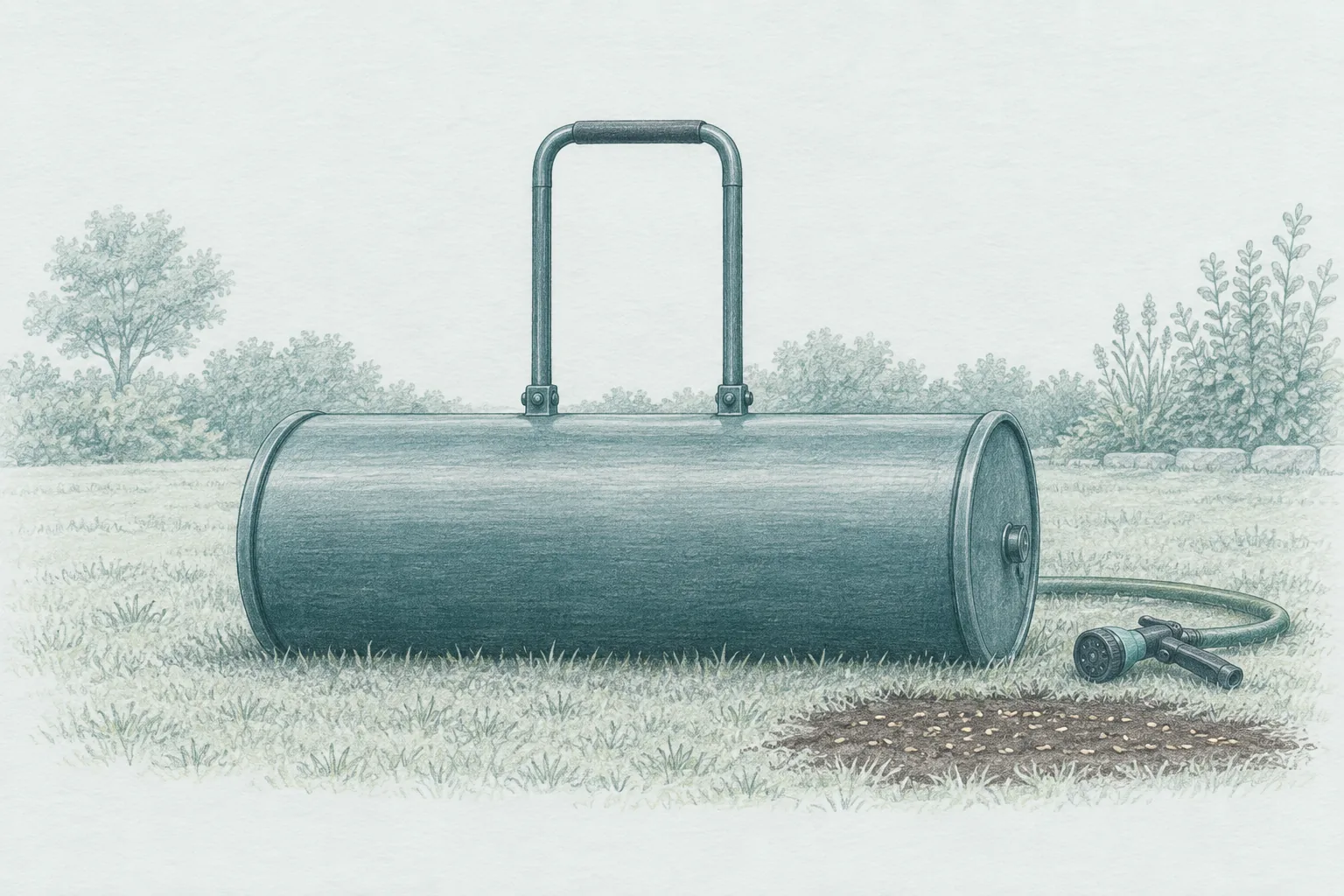
The VEVOR 13-Gallon Lawn Roller is the best lawn roller for most residential yards. It is a push-style steel drum that holds up to 46 liters of sand or water, and the sealed plug design holds water without leaking at the plug or the axle seals.
The U-shaped ergonomic handle makes it easy to push and pull, and the scraper bar keeps clippings from building up on the drum face. Rounded drum edges protect the lawn when you turn, and the compact size makes it easy to store upright.
Who it is for: Homeowners overseeding, laying sod, or knocking down small bumps in a typical yard. Skip it for a large property, where a tow-behind roller covers more ground per pass.
Shop: VEVOR 13-Gallon Lawn Roller on Amazon
Best push or tow: Brinly 270 lb poly roller
The Brinly 270 lb Combination Push/Tow Poly Lawn Roller is the best pick if you want flexibility. It is a 28-gallon poly drum rated to 270 pounds with water, and it works as a push roller for tight areas or a tow-behind for larger open spaces.
A tethered easy-turn plug keeps the fill cap attached to the drum so it cannot be lost. The poly drum will not dent or rust and resists weather damage, which makes it a good choice for a roller that lives outside. It measures 24 inches wide, which suits a push roller and tight passes.
Who it is for: Yards with both tight areas and open lawn, or anyone who owns a lawn tractor and wants the option to tow. Skip it if you need a wide drum for a big property, where the tow-behind model is faster.
Shop: Brinly 270 lb Poly Lawn Roller on Amazon
Best tow-behind: VEVOR 400 lb tow-behind roller
The VEVOR Tow Behind Lawn Roller is the best roller for a larger lawn. It holds 400 pounds of sand or water in an LLDPE drum on a steel frame, with a 48-inch rolling width that flattens uneven ground in fewer passes.
Two water inlets make filling easy, and the sealed plugs stay with the drum so you do not lose them. The roller connects to a tractor or ATV with the extended hooks, and the drum stores easily when empty.
Who it is for: Larger properties with a riding mower, tractor, or ATV. Skip it if you do not have a towing vehicle, where a push roller is the only option.
Shop: VEVOR 400 lb Tow Behind Lawn Roller on Amazon
Water versus sand, and how heavy to go
The fill you choose changes how the roller behaves and how easy it is to live with.
Water is the practical choice for most homeowners. It is easy to add with a garden hose, easy to drain through the plug, and you can adjust the weight by simply adding or removing water. At roughly 8.3 pounds per gallon, a 13-gallon drum reaches about 108 pounds and a 20-gallon drum about 170 pounds. The catch is freezing: you must drain the drum completely before winter or the water can crack it.
Sand gives you permanent weight that does not freeze or evaporate, which is useful if you roll often. The downside is that sand is heavy to add, hard to remove, and it makes the roller hard to transport when you want it lighter. It is the right fill for a roller that stays on one property and works heavy clay.
On weight, the guidance is simple: 150 to 300 pounds for residential leveling and seed pressing, and no more than about 300 pounds behind a consumer mower. A roller under 100 pounds is only good for pressing seed. Heavier than 300 pounds risks soil compaction and puts strain on a light tractor.
Rolling a lawn the right way
The technique is short, and doing it in the right order is what makes it work.
- Aerate the high spots first. Punch holes in the raised areas so the sand and topsoil you add have somewhere to settle.
- Add a thin layer, not a thick one. A quarter to a half inch of sand or topsoil at a time, worked into the aerated holes.
- Water, then roll. Moist soil gives slightly under the drum, which firms it without over-compacting.
- Roll in two directions. One pass each way helps the surface settle evenly instead of leaving ridges.
- Roll light and rarely. A roller is a finishing tool. Using it heavily every month compacts soil and hurts the lawn.
Who should skip a lawn roller
A roller is not the right tool for every lawn problem.
- Your lawn is compacted, not bumpy. Aerate instead. Rolling compaction makes it worse.
- You have deep dips and hollows. Topdressing and leveling mix fix those; a roller will not.
- You have less than a few hundred square feet. A tamper or a hand tamp does the same job.
- You want to fix a lumpy lawn in one session. Real leveling takes a season of thin topdressing.
For a lawn that is mostly flat with small bumps and fresh seed, though, a light roller is the tool that presses everything into place.
Bottom line
The VEVOR 13-gallon push roller is the best lawn roller for most yards, because its sealed plug holds water without weeping and its rounded drum edges protect turf on turns. The Brinly 270 lb poly roller pushes or tows for flexible use, and the VEVOR 400 lb tow-behind covers wide passes behind a tractor or ATV.
For the rest of the lawn-care routine, browse the garden and lawn care guides, the best lawn aerator, and the best grass seed for shade.
Frequently Asked Questions
What is the best lawn roller for leveling a lawn?
The VEVOR 13-gallon push roller is the best pick for most yards, because its sealed plug holds water without leaking and its rounded drum edges protect turf on turns. For a larger lawn, a tow-behind roller like the VEVOR 400 lb model covers more ground per pass.
How heavy should a lawn roller be?
For most residential leveling and seed pressing, a filled weight between 150 and 300 pounds works well. Water fill gives about 8.3 pounds per gallon, so a 20-gallon drum weighs around 170 pounds when full. Keep the roller under about 300 pounds behind a consumer mower, and avoid slopes steeper than 10 degrees.
Should I fill a lawn roller with water or sand?
Water is easier to add and drain, which suits seasonal use. Sand gives you permanent weight without freezing or evaporation, but it is harder to remove. For most homeowners, water is the practical fill, and you should drain it before freezing weather.
Can a lawn roller damage my lawn?
A roller used too heavy or too often compacts soil, which is the opposite of what healthy grass needs. Roll lightly to press seed and level small bumps, and roll only when the soil is moist but not soaked. For compaction problems, aerate first, then roll.
When should I roll my lawn?
Spring is the best time, when grass is coming out of dormancy and roots are growing. Roll after seeding or sodding to press the seed into contact with soil, and water first so the soil gives slightly under the drum.
Do lawn rollers help level a bumpy lawn?
A roller presses down high spots and firms loose soil, but it will not fix deep dips on its own. For real leveling, aerate the high spots, add a thin layer of sand or topsoil, water, and then roll. Rolling alone just compresses what is already there.
How do I store a lawn roller for winter?
Drain the drum completely before the first freeze, because water left inside can crack the drum or seize the bearings. Tip the roller on its side to finish draining, then store it upright in a shed or garage.