Best Log Splitter for Home Use (2026): Electric and Gas Picks
Chainsaws and tree care
The best log splitter for home use is the BILT HARD 6.5-ton electric, a quiet plug-in machine that handles dry softwood and light hardwood. The SuperHandy 20-ton gas splitter is the step up for big rounds and long sessions.
Our picks
The best log splitter for home use is the BILT HARD 6.5-ton electric for the usual case: a couple of face cords a year, dry softwood and light hardwood, and a shed or garage outlet nearby. It splits with a button instead of a pull cord, and it does not fill the yard with exhaust. The SuperHandy 20-ton gas splitter is the upgrade when the rounds get big, the wood gets dense, or the pile gets serious.
This guide sits inside the chainsaw and tree care guides. If you are still cutting your own rounds, start with the best cordless chainsaw and the best pole saw for tree trimming, then come back for the splitting step.
How much splitter a home woodpile needs
Three numbers decide this purchase: tonnage, cycle time, and log size.
Tonnage is the force the wedge pushes with. Six to seven tons handles dry softwood and light hardwood. Twenty tons handles dense hardwood, green wood, and knotty rounds. Buying more tonnage than your wood needs mostly buys you a heavier machine.
Cycle time is how long the ram takes to split and return. A 6.5-ton electric runs around 18 seconds, which is fine for an occasional pile. A 20-ton gas machine runs around 7.5 seconds, which is what keeps a multi-cord weekend moving.
Log size is the hard limit. Check the cylinder diameter and length rating against the biggest rounds you bring home, not the average ones.
Top pick: BILT HARD 6.5-ton electric log splitter
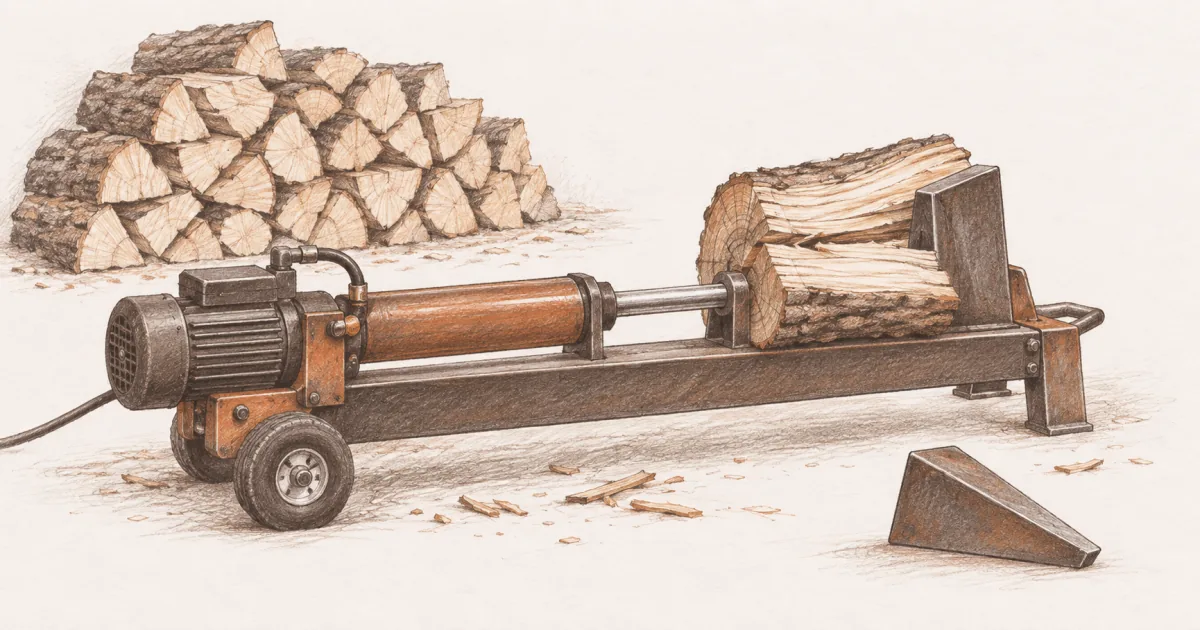
The BILT HARD 6.5-Ton Electric Log Splitter is the best log splitter for most homes. The 15-amp motor makes 6.5 tons of splitting force and drives a hydraulic ram that resets in about 18 seconds.
It takes logs up to 9.8 inches across and 20.5 inches long, which covers the rounds a typical woodstove burns. The 5.7-inch wheels roll it from the shed to the pile, and the steel beam and wedge hold up to years of seasonal use. It is also the quietest way to split firewood at home.
Who it is for: Homeowners with a fireplace or fire pit who split dry softwood and light hardwood a few times a season. Skip it if your wood is dense hardwood above 8 inches, where the wedge will stall.
Shop: BILT HARD 6.5-Ton Electric Log Splitter on Amazon
Best for big piles: SuperHandy 20-ton gas splitter
The SuperHandy 20-Ton Gas Log Splitter is the pick for a serious firewood habit. A 7HP engine drives a 20-ton two-stage hydraulic system, and the rapid auto return resets the ram in about 7.5 seconds.
It splits logs up to 20 inches long and 16 inches across, which covers the big rounds that stall smaller machines. The horizontal full-beam design and 10-inch wheels make it movable, and at around 130 pounds it is still a one-person machine. Run it outside, and expect it to be loud.
Who it is for: Households that burn several cords a year, split dense hardwood, or process big rounds from their own trees. Skip it if you split a few softwood rounds a season, where the electric BILT HARD is simpler and quieter.
Shop: SuperHandy 20-Ton Gas Log Splitter on Amazon
Tonnage, cycle time, and the wood you actually split
The most common mistake is buying for the log you dream about instead of the wood in your shed.
Dry softwood splits easily at low tonnage. It is also the wood most homeowners actually burn, which is why a 6.5-ton machine satisfies so many buyers. Dense hardwood needs more force, and green wood needs the most of all.
Cycle time matters more as the pile grows. Splitting one wheelbarrow a week, an 18-second cycle is invisible. Splitting three cords in a weekend, seven seconds per log adds up to hours saved.
Vertical splitting is worth having if you handle big rounds, because you do not have to lift them onto the beam. Both machines here are horizontal, so keep your rounds to a size you can lift safely.
Setting up and running a splitter without wrecking it
A few habits keep a splitter working for years.
- Bleed the system first. Loosen the bleed screw and cycle the empty ram before the first log.
- Set it at working height. Waist height saves your back and makes the two-hand controls comfortable.
- Keep both hands on the controls. That is what the two-hand design is for. Never reach across the beam.
- Check the fluid. ISO 32 hydraulic jack oil only, topped up on level ground.
- Watch the cord. On an electric machine, use a 12-gauge cord under 50 feet and a 40-amp circuit for long sessions.
- Split dry wood when you can. Seasoned rounds split cleanly and put far less strain on the pump.
Who should skip a power splitter
A power splitter is not the right tool for everyone.
- You split a few softwood rounds a year. A maul and a chopping block are cheaper and take less space.
- Your wood is mostly green hardwood. Season it first, or rent a bigger machine for the weekend.
- You have no outdoor space for a gas engine. An electric splitter needs an outlet but no ventilation.
- You need a machine only once. Rent a 20-ton splitter for the weekend instead of storing one.
For everyone else with a woodstove and a driveway full of rounds, a splitter earns its space.
Bottom line
The BILT HARD 6.5-Ton Electric Log Splitter is the best log splitter for most home firewood, because it plugs into a standard outlet, runs quiet, and handles dry softwood and light hardwood without maintenance. The SuperHandy 20-Ton Gas Splitter is the right upgrade when the wood is dense, the rounds are big, or the pile is measured in cords.
For the cutting and cleanup side, browse the chainsaw and tree care guides and the best cordless chainsaw.
Frequently Asked Questions
What size log splitter do I need for home use?
For an occasional firewood pile of dry softwood, 6.5 tons is plenty. If you split oak, hickory, or knotty maple above about 8 inches, or you process several cords a year, move up to 20 tons. Tonnage is about the wood, not the bragging rights.
Is a 6.5-ton electric log splitter enough?
It is enough for dry softwood like pine, fir, cedar, and poplar, and it handles light hardwood up to about 8 inches across. It is not enough for green oak or big knotted rounds, where the wedge stalls and the motor strains. Match the machine to the wood you actually have.
What is the best log splitter for a homeowner?
The BILT HARD 6.5-ton electric is the best fit for most homes. It runs on a standard outlet, needs no fuel or engine maintenance, and stays quiet enough for a suburban lot. Homeowners with a bigger wood habit get more done with a 20-ton gas splitter like the SuperHandy.
Do I need to bleed a log splitter before first use?
Yes, and it is the step owners most often miss. Loosen the bleed screw before the first run so air can escape the hydraulic tank, then cycle the empty ram a few times. Skip it and the wedge moves sluggishly for the first few logs. Tighten the screw again before you move the machine.
What hydraulic oil goes in an electric log splitter?
Use standard hydraulic jack oil, normally an ISO 32 grade. Do not substitute motor oil, gear oil, or brake fluid, because they damage the seals. Check the level before the season starts and top it up with the machine on level ground.
Can I run an electric log splitter on an extension cord?
Short runs are fine with a heavy cord. Keep it under about 50 feet and use a 12-gauge cord, because voltage drop makes the motor hum and trip its overload. A 40-amp circuit is worth having for long sessions.
Will a 6.5-ton splitter handle oak?
Dry oak up to about 8 inches, if the grain is straight. Knotty oak and anything larger will stall the wedge, and green oak is a non-starter. If oak is your main firewood, buy the 20-ton gas splitter instead.