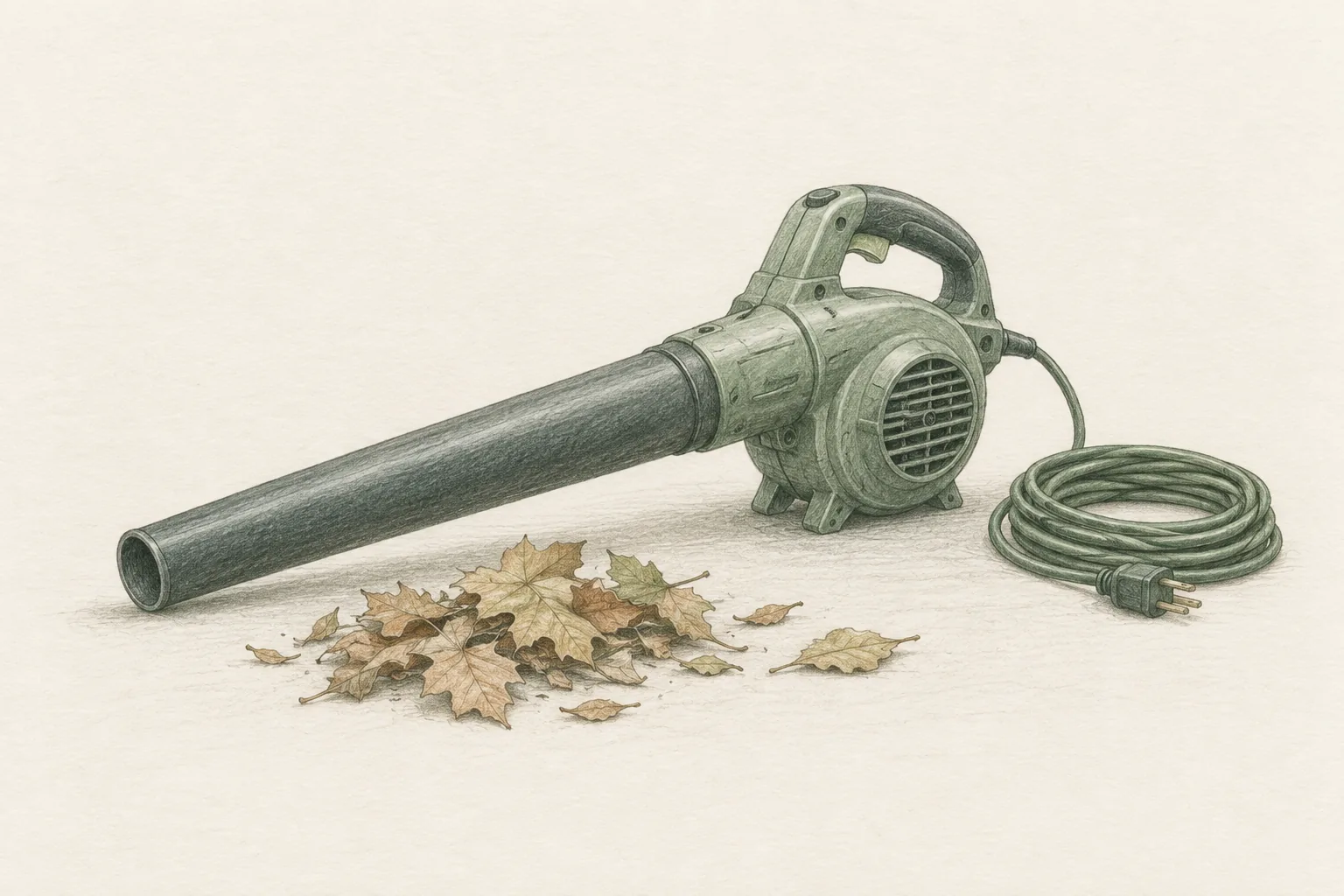
Best Leaf Blower for Small Yard (2026): 3 Picks That Fit
Trimmers and blowers
The best leaf blower for a small yard is the BLACK+DECKER LB700, a 4.4-pound corded blower that clears a driveway on a single sweep. The VIBOGEN cordless runs on two batteries for grab-and-go jobs, and the MZK 20V runs the longest on one charge.
Our picks
The best leaf blower for a small yard is the BLACK+DECKER LB700 for most people: a corded handheld that clears a driveway, patio, and walk on a single sweep, weighs about as much as a full thermos, and does not need a battery to top up between sessions. On a small lot the cord is a minor annoyance, not a dealbreaker, because the outlet is usually close.
The VIBOGEN cordless blower is the one to grab when the job is a porch, a garage floor, or the beds along the back fence where an extension cord will not reach. The MZK 20V is the pick for longer one-battery sessions, with the longest claimed run time of the three.
This guide sits inside the yard tool and blower guides, alongside the best string trimmer for edging for the grass edges and the best hedge trimmer for tall hedges for the shrubs.
What a small yard actually needs from a blower
Small yards are a different buying problem from big lots, and the spec sheet usually points you the wrong way.
Weight matters more than raw airflow. On a quarter-acre or less, you are not running the blower for an hour. You are running it for ten or fifteen minutes and then putting it away. A four-pound blower you can hold one-handed beats a twelve-pound backpack you dread hauling out.
Run time is a non-issue if the job is short. A cordless battery that would be laughable on five acres is perfectly fine on a patio. Owners of dual-battery 20V blowers report around ten minutes per battery at full tilt, which covers most small-yard tasks with one swap.
Hard surfaces are the real job. Driveways, walkways, patios, decks, and garage floors are where a blower beats a rake by a wide margin. Leaves on grass can wait for the mower to mulch them.
Cord versus battery is a distance question. If every part of your yard is reachable with one outdoor extension cord, corded costs less and never quits mid-job. If you have to snake a cord around plantings or across a car, cordless is worth it.
Top pick: BLACK+DECKER LB700 corded blower
The BLACK+DECKER LB700 is the best leaf blower for a small yard for the usual case: a driveway, a patio, sidewalks, and a few planting beds near an outlet. It moves up to 180 MPH and 180 CFM from a 7-amp motor, which is enough to clear dry leaves, grass clippings, and light debris from hard surfaces.
At 4.4 pounds it is light enough for one-handed work around flower beds and along a fence line. The built-in cord retention holds the extension cord in place, so you are not re-plugging every thirty seconds. It has been one of the best-selling handheld blowers for years, and owners consistently describe it as light, powerful enough for a small lot, and good value.
Who it is for: Small-lot homeowners with hard surfaces and an outlet in reach. Skip it if your yard is too big to run a cord, where a cordless or backpack blower makes more sense.
Shop: BLACK+DECKER LB700 Corded Leaf Blower on Amazon
Best cordless: VIBOGEN cordless blower with two batteries
The VIBOGEN cordless leaf blower is the best pick when an outlet is inconvenient. It delivers up to 420 CFM and 150 MPH, and the kit includes two 21V 4.0Ah batteries plus a charger, so you can keep working through a battery swap instead of stopping to recharge.
Two speeds let you drop to low for dust and light debris and switch to high for leaves and grass clippings. The bare unit weighs about 2.7 pounds without the battery, which makes it easy to use one-handed around cars, patio furniture, and raised beds. Battery level indicators on each pack tell you how much charge is left before you commit to a job.
Who it is for: Anyone who wants grab-and-go cleanup around a patio, garage, or the beds along a fence. Skip it for heavy, wet leaf piles, where the corded pick's steady power is stronger.
Shop: VIBOGEN Cordless Leaf Blower on Amazon
Best for long run time: MZK 20V cordless blower
The MZK 20V Cordless Leaf Blower is the pick for longer one-battery sessions. It is rated at up to 75 minutes per charge, several times the VIBOGEN's run time between pack swaps, so a porch, a walk, and a garage apron finish on one battery. It is a cordless handheld designed for cleanup of patios, driveways, sidewalks, and garages, and the kit includes a battery so you can use it out of the box.
At 3.9 pounds it stays comfortable for one-handed work, though it is a little heavier than the VIBOGEN bare tool. It is a good first blower for a yard small enough that light airflow is all you need, or a second blower for porch-and-walk touch-ups.
Who it is for: Small patios, porches, garages, and sidewalks where one-handed work and a long single charge are the whole task. Skip it if you are clearing a leaf-covered lawn, where more airflow pays off.
Shop: MZK 20V Cordless Leaf Blower on Amazon
Corded versus cordless: which fits your yard
The decision comes down to how far the outlet is and how long the job runs.
A corded blower gives you constant power and the lowest cost per unit of airflow. A cordless blower gives you freedom and a short window per battery. On a small yard, you can often have both jobs covered by one corded blower plus a cheap light cordless for touch-ups.
Getting the most from a small-yard blower
A few habits separate a clean yard from a blowing session that never ends.
- Work downhill and downwind. Push leaves toward the pile, not against the breeze, or you will chase them back across the driveway.
- Blow onto a tarp. On a small lot, a tarp catches the pile so you can drag it once to the compost or the curb instead of pushing leaves the whole way.
- Use low speed near beds. Full power scatters mulch and strips topsoil from plantings. Feather the trigger or drop to the low setting.
- Clear the gutters and window wells carefully. Blow across, not into, so debris does not end up in the downspout.
- Run the mower last. Mulch what is left on the grass, then blow the pavement.
Who should skip a handheld blower
A handheld blower is not the right tool for everyone.
- Your lot is over half an acre with mature trees. A backpack or wheeled blower carries the weight and moves far more air.
- You only have grass and one tree. A rake is faster and quieter on a postage-stamp lawn.
- You need to vacuum and mulch leaves. Look for a blower-vacuum-mulcher combo instead of a straight blower.
- You fight wet, matted leaves every fall. Pick the highest-CFM model you can, or blow right after a dry spell.
For most small yards with pavement and a few beds, though, a light handheld blower is the fastest way to get the leaves off the concrete and be done.
How much does it cost to run a leaf blower?
A corded blower uses a few cents of power per cleanup and a cordless blower uses about a penny a charge, so the two are close enough that convenience, not the power bill, should decide.
Does a corded blower cost more to run than a cordless one?
Roughly the same, and both are cheap. The LB700 draws 7 amps at 120 volts, which is 840 watts. A 15-minute driveway pass uses about 0.21 kWh, or about 4 cents at the US average residential rate of about 17 cents per kWh. A VIBOGEN 21V 4.0Ah pack is 84 Wh, so a full charge costs about 1.4 cents, and a typical cleanup uses one pack or less.
Which leaf blower is quieter?
The VIBOGEN lists 75 dB, about the level of a busy restaurant, so a short job will not carry far. Corded handhelds of this size run louder. Whichever you buy, ear protection is a sensible habit once you are blowing for more than a few minutes.
How long does a small-yard cleanup take?
Most small-lot jobs are short. A porch or a walk takes about 5 minutes, a driveway and the beds take 10 to 15, and the whole lot after a windy night takes about 20. That short job is why run time per battery matters less on a small lot than airflow does, and why the corded pick's unlimited power is not the disadvantage it sounds like.
Blower questions for a small yard
The spec sheet matters less than how the tool fits a short job. These are the questions we hear most.
How much CFM do you need for a small driveway?
About 180 CFM moves dry leaves and grass clippings off hard surfaces. Step toward 400 CFM for wet leaves or pine needles. On a short driveway, air speed matters for lifting debris, and total volume matters for pushing a pile.
How long does a cordless blower run per battery?
A 20V 4.0Ah pack runs roughly ten minutes at full speed. Two batteries in rotation cover a patio, a walk, and a driveway. Think in jobs per battery, not hours, on a small lot.
Can a small blower move wet leaves?
Slowly, and only in thin layers. Wet leaves stick to pavement and to each other, so a low-CFM blower pushes them an inch at a time. Blow after a dry spell, or choose the highest-CFM model your budget allows.
Is a bigger blower always easier?
No. Weight matters more than airflow on a short job. A heavy backpack empties a driveway fast but is a chore to haul out for a five-minute cleanup. A four-pound handheld is the better fit for the jobs most small yards actually have.
The corded blower is the better value for pavement near an outlet, and the cordless blower is the one you reach for when the job is away from one. Most small-yard households end up with one of each, or a corded blower plus a light cordless for touch-ups. When the leaves are gone, the best lawn mower for a small yard handles the grass, and the garden and lawn care guides cover the beds.
Bottom line
The BLACK+DECKER LB700 is the best leaf blower for a small yard, because it puts 180 MPH of air in a 4.4-pound body, never needs a recharge on a short job, and costs less than most cordless kits once you add a cord. The VIBOGEN cordless blower is the pick when the outlet is out of reach, and the MZK 20V runs the longest per charge for one-handed touch-ups.
For the rest of the yard-tool lineup, browse the yard tool and blower guides, the best string trimmer for edging, and the best hedge trimmer for tall hedges.
Frequently Asked Questions
What is the best leaf blower for a small yard?
A corded handheld blower like the BLACK+DECKER LB700 is the best fit for most small yards. It is light, it never runs out of power, and it clears a driveway and patio without stopping to recharge. If you want to work away from an outlet, a cordless model with two batteries is the better choice.
How much CFM and MPH do I need for a small yard?
On a small city lot, 180 MPH and 180 CFM is enough for dry leaves and grass clippings on hard surfaces. Step up toward 400 CFM if you deal with wet leaves or pine needles. Higher numbers help most on heavy debris, not on a light skim of dry leaves.
Is corded or cordless better for a small yard?
Corded gives you more power per dollar and never needs a recharge, which suits a yard you can reach with one extension cord. Cordless is more convenient around beds, cars, and the far corner of the lot. Many homeowners keep a light corded blower for the driveway and a cordless for touch-ups.
Do leaf blowers come with a power cord?
Corded blowers usually do not. The BLACK+DECKER LB700 has a short built-in receptacle for a user-supplied outdoor extension cord, so add one to your order if you do not already own a heavy-gauge outdoor cord.
Can a leaf blower damage my lawn or plants?
At full power on dry turf, no. Aim the air across the surface rather than down into the soil, and use a lower speed near flower beds and mulch. Never blow into a pile of gravel or near windows where debris can fly.
How do I keep leaves from coming back next week?
Blow them onto a tarp and drag the tarp to the compost or curb rather than pushing a pile across the whole yard. On a small lot, one tarp load usually finishes the job, and you stop re-blowing the same leaves.
Is a leaf blower worth it for a tiny yard?
Yes if you have hard surfaces, a driveway, or a lot of deciduous trees. On a postage-stamp lawn with one tree, a rake is genuinely faster. A blower is worth having on pavement and between plantings where a rake cannot reach.